Container Gardening
Beginner Herbs for a Sunny Windowsill
Choose beginner-friendly herbs for a sunny windowsill with realistic light, watering, container, and harvesting expectations for small homes.
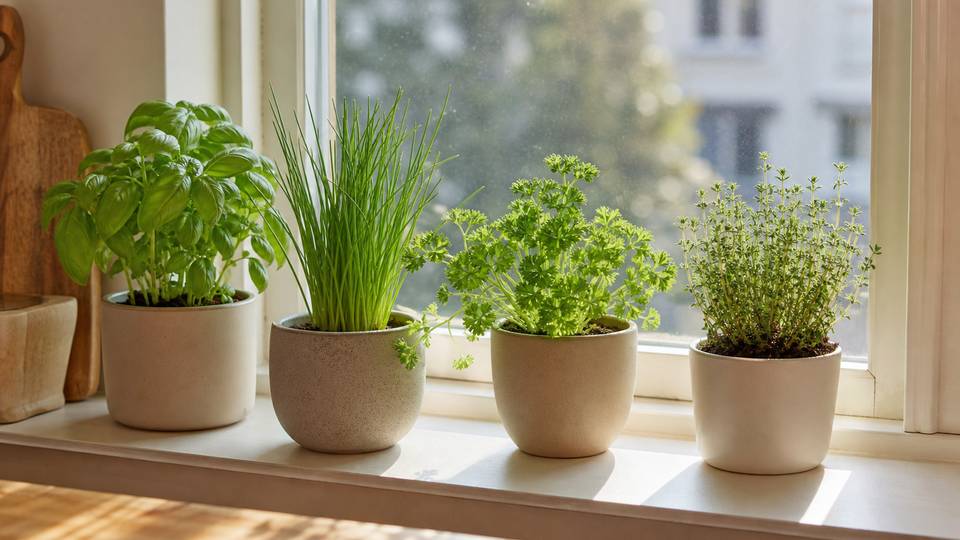
A sunny windowsill herb garden sounds simple: buy a few herbs, set them by the glass, and snip leaves for dinner. It can be simple, but only if the window is bright enough and the expectations stay small.
Indoor herbs are container plants first. They need light, drainage, clean growing conditions, and enough room for their roots. They are not tiny decorations that happen to be edible.
Quick Answer
Beginner herbs for a sunny windowsill include basil, chives, parsley, mint, thyme, and oregano, depending on your light and space. Choose clean containers with drainage, use potting mix suited for containers and edible plants, avoid treated ornamental plants, and harvest lightly so the plant can keep growing.
Start With the Window, Not the Herb List
Most culinary herbs need bright light to grow well indoors. A sunny windowsill is usually better than a shelf across the room, but not all windows are equal.
Watch the window for a day:
- How many hours of direct sun reach the sill?
- Is the glass very cold at night?
- Does the afternoon sun heat the pot sharply?
- Is the sill wide enough for stable pots?
- Will curtains, blinds, or screens block light?
University extension guidance for indoor herbs commonly emphasizes strong light and well-drained containers. Iowa State Extension notes that light is often the limiting factor for indoor herbs. If your window is dim, choose fewer herbs or consider whether an outdoor balcony container would be more realistic in season.
Beginner Herbs to Consider
| Herb | Why Beginners Like It | Watch For |
|---|---|---|
| Basil | Fast-growing and familiar in cooking | Wants strong light and can decline in cold windows |
| Chives | Compact, forgiving, and easy to snip | Needs steady light for useful regrowth |
| Parsley | Useful and tidy in a pot | Can be slower than basil |
| Mint | Vigorous and good in its own container | Can crowd other herbs if planted together |
| Thyme | Smaller leaves and lower water needs | Dislikes staying wet |
| Oregano | Compact if trimmed and useful in cooking | Needs bright light to stay dense |
This is not a guarantee that every herb will thrive on every sill. It is a starting list for a bright window and attentive care.
Give Each Herb Enough Pot
Tiny novelty pots dry quickly and restrict roots. A small herb can start in a modest container, but it should still have drainage holes and enough potting mix to hold moisture between checks.
Use separate pots when possible. Mint especially is easier to manage alone. Separate pots also let you water thyme more sparingly while giving basil a little more attention.
If you use one long planter, group herbs with similar water and light needs. Do not mix a plant that likes to dry more with one that wants steadier moisture unless you are prepared for compromise.
Water Like Container Plants
Check the potting mix before watering. Herbs in small pots can dry quickly in sun, but indoor pots can also stay wet in cool rooms.
Water until the mix is evenly moist and extra water can drain. Empty the saucer after drainage slows. Do not leave edible herbs sitting in stale water.
If leaves wilt and the soil is dry, water slowly. If leaves yellow and the mix is wet, pause and check drainage, light, and temperature before adding more water.
Harvest Lightly at First
The first harvest should not strip the plant. Let the herb settle and put on new growth before cutting heavily.
Use clean scissors or clean hands. Take small amounts from healthy growth, and avoid removing more than the plant can replace. For leafy herbs like basil, regular light trimming can encourage a fuller plant, but cutting too much at once can slow it down.
Wash herbs before using them. If you bought a plant as an ornamental display, confirm it was intended for edible use before eating from it.
Keep Food and Product Safety Conservative
For edible herbs, avoid guessing about treatments. Do not eat from plants treated with pesticides, systemic products, leaf shine, or other products unless the label clearly allows use on edible crops and the required directions have been followed.
Use clean containers. Avoid containers that previously held chemicals, paint, solvents, or unknown materials. Choose potting mix intended for container growing rather than garden soil dug from outside.
This is simple caution, not a complicated kitchen rulebook.
When Windowsill Herbs Struggle
Indoor herbs often struggle because the window is not as bright as expected. Common signs include long weak stems, pale growth, leaves dropping, or herbs that do not regrow after cutting.
Other causes include:
- Pots too small
- Poor drainage
- Cold glass
- Heat vents
- Overharvesting
- Watering every herb the same way
If the herbs keep stretching toward the light, move them to the brightest safe spot or reduce the number of herbs you are trying to grow indoors.
A Good First Setup
Start with two or three herbs, not ten. Choose one fast leafy herb, one compact herb, and one herb you already cook with.
A simple first windowsill:
- Basil in its own pot
- Chives in a small draining pot
- Thyme or oregano in a separate pot
That setup teaches light, watering, and harvesting without turning the sill into a crowded tray.
Sources and Further Help
For additional guidance on growing herbs and edible container plants, see:
- Iowa State Extension: What growing conditions are best for indoor herbs?
- University of Minnesota Extension: Growing herbs in home gardens
- Virginia Cooperative Extension: Vegetable Gardening in Containers
Quick Questions
What herbs are easiest on a sunny windowsill?
Basil, chives, mint, parsley, thyme, and oregano are common beginner options if the window has enough bright light for the specific herb.
Can herbs grow indoors without direct sun?
Some herbs may survive in bright indirect light, but many culinary herbs grow best with strong light. A dim window usually gives weak growth.
Is it safe to eat herbs grown indoors?
Use clean containers, edible-plant potting mix, untreated plants or seeds meant for growing, and wash harvested herbs. Do not eat plants treated with products not labeled for edible crops.