Indoor Plant Care
Brown Leaf Tips on Indoor Plants: Common Causes
Brown tips on indoor plants can come from water stress, dry air, fertilizer salts, drafts, or plant type. Learn what to check first.
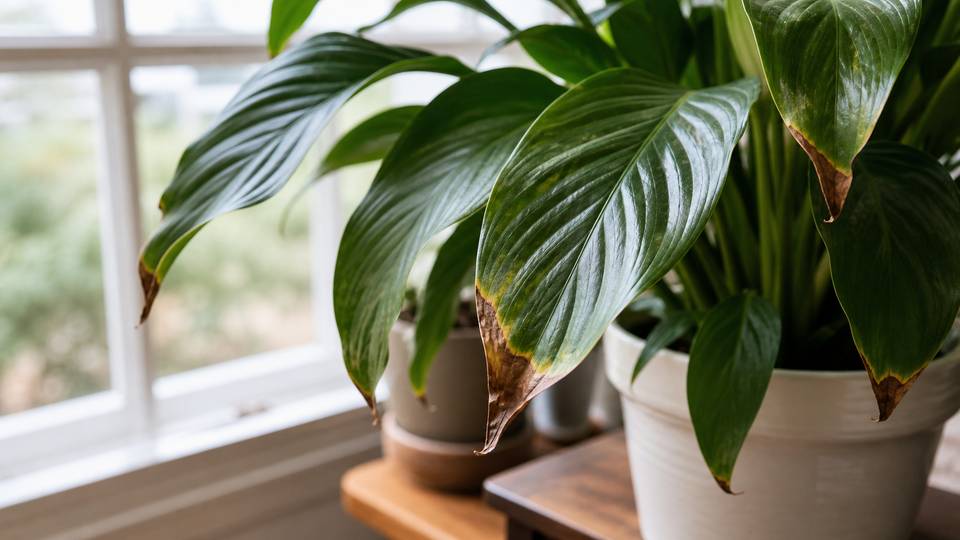
Brown leaf tips are frustrating because they look permanent, and they usually are. The dry brown part will not turn green again. The useful question is not how to reverse that exact tip, but how to prevent more leaves from developing the same problem.
There is no single brown-tip diagnosis. The cause can be water stress, dry air, fertilizer buildup, drafts, heat, plant sensitivity, or several small issues together.
Quick Answer
Brown tips on indoor plants often come from inconsistent watering, low humidity, fertilizer salt buildup, hot or cold drafts, direct sun stress, or normal wear on older leaves. Check the plant name, potting mix moisture, drainage, room air, recent fertilizer use, and where the damage appears before changing care.
Read the Damage Pattern
Look at the whole plant before you trim. Brown tips on a few older leaves are different from every new leaf emerging damaged.
| Pattern | What to Check First |
|---|---|
| Dry tips on older leaves only | Normal aging, past stress, or occasional dryness |
| Tips and edges browning on many leaves | Watering pattern, humidity, heat, or drafts |
| Brown tips after fertilizing | Product strength, frequency, dry soil, or salt buildup |
| Sun-facing crispy patches | Direct sun or hot window exposure |
| Soft brown areas or spreading spots | Possible disease, rot, or pest issue needing closer review |
These are clues. They are not a final diagnosis.
Check Watering Consistency
Many brown-tip problems start with uneven moisture. A plant may dry too far between waterings, then receive a large soak, then dry too far again. Some plants tolerate that cycle. Others show it at the leaf tips.
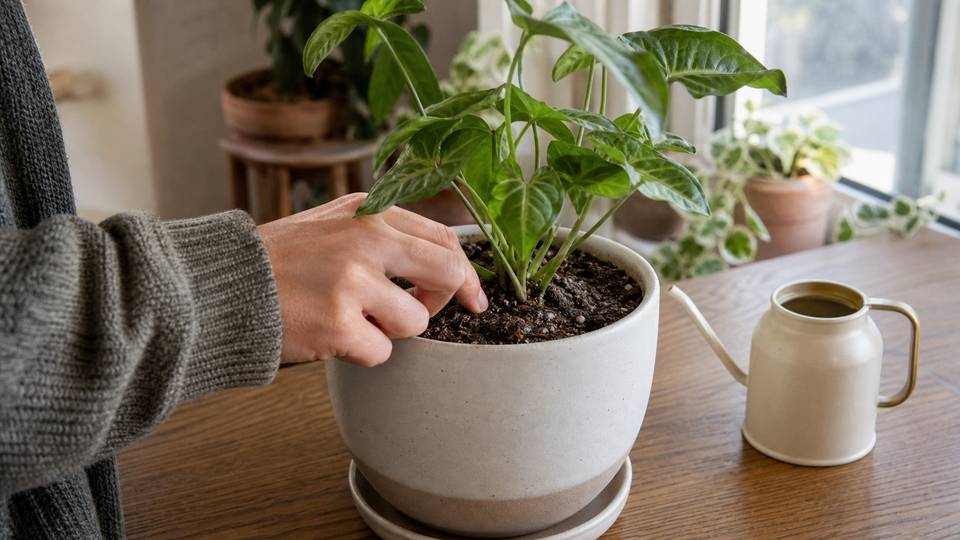
Check the potting mix below the surface when practical. If it is bone dry, pulled away from the sides, or very light, the plant may be drying too hard. If it stays wet for many days, roots may be stressed in the other direction.
Virginia Cooperative Extension’s container houseplant watering guidance emphasizes that plants vary in water needs and that pot, mix, and growing conditions affect watering. That is why brown tips should lead to a check, not an automatic watering schedule.
Look at Room Air and Humidity
Dry indoor air can contribute to brown tips, especially on plants that prefer more humidity. Winter heating, air conditioning, and vents can make this more noticeable.
Before buying anything, try the simple checks:
- Is the plant beside a heat vent?
- Is it near a cold draft?
- Is the room very dry in winter?
- Is the plant a humidity-sensitive type?
- Are several nearby plants showing the same crispy edges?
Grouping plants, moving them away from vents, or using a humidity tray may help some situations, but they do not replace correct watering or enough light.
Review Fertilizer Use
Fertilizer is useful when a plant needs nutrients and is actively growing. It can also create stress if it is too strong, too frequent, added to dry soil, or used on a plant that is already struggling.
Brown tips after recent fertilizer use can point toward fertilizer salts or root stress, but do not assume. Check the product label, the timing, the plant’s growth season, and whether the potting mix has been drying normally.
Avoid doubling fertilizer because the plant looks weak. A stressed root system is not helped by stronger feeding.
Check Light, Heat, and Window Position
Brown tips and brown patches are not the same thing, but they can overlap. If the damage is mostly on the window-facing side, the plant may be getting too much direct sun or heat.
Touch the area near the plant during the brightest part of the day. If the glass, sill, or nearby air feels hot, move the plant back slightly or filter the light. If the window is cold at night, move tropical plants away from the glass.
Illinois Extension notes that houseplants can respond to changes in light, location, and watering. Keep that in mind if brown tips appeared after a move.
Trim for Appearance, Not Treatment
You can trim dry brown tips with clean scissors. Follow the natural shape of the leaf and leave a very thin edge of brown tissue instead of cutting into green tissue.
Do not remove many leaves at once unless they are fully dead or diseased. Leaves still help the plant even if their tips are imperfect.
Trimming makes the plant look tidier. It does not solve watering, humidity, fertilizer, or draft problems.
Common Mistakes
One common mistake is misting heavily every day and ignoring the potting mix. Brief misting may not change the room’s humidity for long, and wet leaves can be a poor fit for some plants.
Another mistake is flushing, fertilizing, repotting, and moving the plant all at once. If the plant is stable, adjust one likely cause first and watch new growth.
A third mistake is trying to make old damage disappear. Watch for whether new leaves stay cleaner at the tips.
When to Ask for Help
Ask for local plant help if brown areas spread quickly, leaves develop soft wet spots, stems turn mushy, pests are visible, or several plants decline at the same time. Bring photos of the whole plant, the damaged leaves, the pot, and the room location.
For simple dry brown tips, the best next step is usually patient observation. Improve the most likely care issue, then judge the next few leaves rather than the damaged ones already on the plant.
Sources and Further Help
For additional guidance on watering, houseplant stress, and indoor plant care, see:
- Virginia Cooperative Extension: Properly Watering Container Houseplants
- Illinois Extension: Keep houseplants happy with simple solutions
Quick Questions
Should I cut brown tips off houseplant leaves?
You can trim dry brown tips for appearance with clean scissors, but trimming does not fix the cause.
Do brown tips always mean low humidity?
No. Dry air is one possible cause, but watering stress, fertilizer buildup, drafts, heat, and plant type can also contribute.
Will brown tips turn green again?
No. Damaged brown tissue will not turn green again, so focus on preventing new damage.