Indoor Plant Care
How to Water Indoor Plants Without Overwatering
Learn a simple indoor plant watering routine based on soil moisture, pot drainage, season, and plant signals instead of fixed schedules.
Overwatering usually starts with good intentions. A new plant owner wants to be consistent, picks a watering day, and keeps watering even when the pot is still damp. The plant may look soft, yellow, or tired, so the reader adds more water and makes the problem harder to read.
Indoor plants do better with a checking routine than a fixed watering schedule. The goal is not to water less forever. The goal is to water when the plant and potting mix are ready.
Quick Answer
Check the soil before you water. For many indoor plants, the top layer of potting mix should dry somewhat before the next watering, but the exact depth depends on the plant, pot size, light, season, and room conditions. Water thoroughly when needed, let extra water drain, and do not leave the pot sitting in a full saucer.
Treat the Calendar as a Check-In, Not a Command
A weekly plant reminder is useful if it means “look at the plants.” It becomes a problem when it means “water every plant.”
A plant near a bright window may dry faster than the same plant across the room. A small terracotta pot may dry faster than a large plastic pot. A plant growing actively in spring may use more water than the same plant in a dim winter apartment.
When the reminder goes off, check:
- Does the top of the soil still look dark and damp?
- Does the pot feel heavy or light?
- Is water still sitting in the saucer or cachepot?
- Are leaves firm, soft, drooping, yellowing, or crisping?
- Has the room become warmer, cooler, brighter, or drier?
That short check tells you more than the calendar.
Use the Soil Test
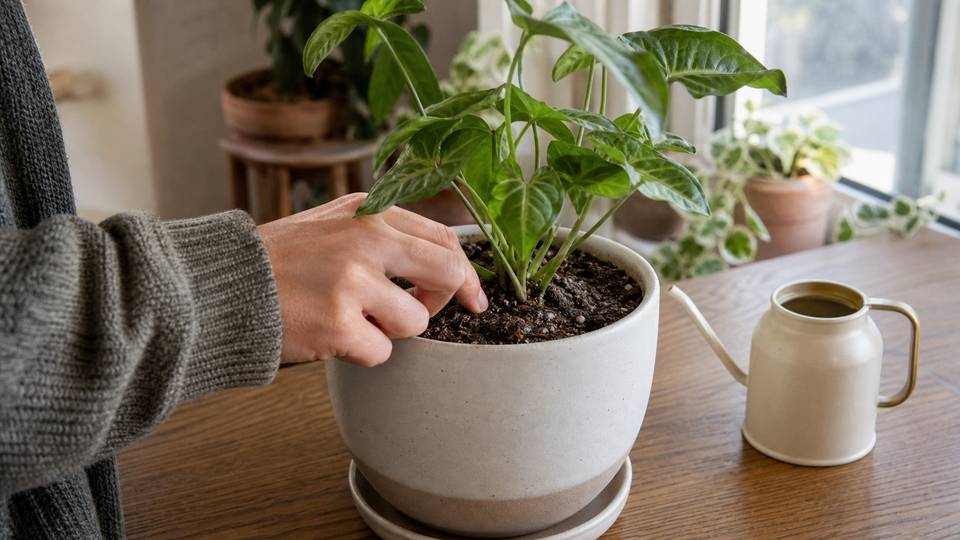
The simplest beginner check is to press a finger into the potting mix. If the top layer is still damp, wait. If it feels dry at the depth that suits the plant, water.
For plants that prefer to dry more between waterings, the pot may need to dry deeper before you water. For plants that prefer more even moisture, waiting until the entire pot is dry may be too much. This is why plant name and care notes still matter.
Clemson Extension notes that watering frequency has no single answer because species, growth stage, location, pot type, and soil mix all change how quickly a plant uses water. That is why a quick soil check works better than a calendar rule.
If you do not want to use your finger, try a wooden chopstick or skewer. Push it into the mix, wait a moment, and pull it out. Damp mix clings more than dry mix. This is not a lab test, but it can help beginners slow down and look before watering.
Check Drainage Before You Blame Yourself
Overwatering is not only about how often you pour water. A pot can stay too wet because the container has no drainage, the saucer stays full, the potting mix is compacted, or the plant sits in a decorative cachepot where extra water hides.
Use this quick check:
| Pot Situation | What It Means | Safer Habit |
|---|---|---|
| Pot has drainage holes | Extra water can leave the root area | Water, let it drain, then empty the saucer |
| Nursery pot sits inside a cachepot | Water may collect out of sight | Lift the inner pot and check for trapped water |
| No drainage hole | Water has nowhere easy to go | Water very cautiously or repot into a draining container |
| Very compact mix | Water may sit unevenly or run down edges | Consider repotting when the plant is otherwise stable |
Decorative pots can work, but they make checking more important.
Water Thoroughly When the Plant Is Ready
Tiny sips can leave some roots dry while the top looks cared for. When the plant is ready for water, water the potting mix evenly until moisture reaches the root area. If the pot has drainage, let extra water run out, then empty the saucer after it drains.
Avoid watering directly into the crown of plants that dislike water collecting in tight leaf centers. Aim for the potting mix unless the plant’s care guidance says otherwise.
If the mix has pulled away from the sides of the pot because it became very dry, water may run down the edges and out the bottom without soaking the root ball. In that case, water more slowly and give the mix time to absorb moisture.
Learn the Difference Between Wet and Dry Stress
Wilting does not always mean “give more water.” Some overwatered plants wilt because roots are struggling in wet, low-oxygen potting mix. Some underwatered plants wilt because the mix is dry and roots cannot take up enough moisture.
Before reacting to wilted leaves, check the soil.
If the mix is dry, water carefully and watch how the plant responds. If the mix is wet, pause watering, check drainage, and move the plant only if light or temperature is also part of the problem.
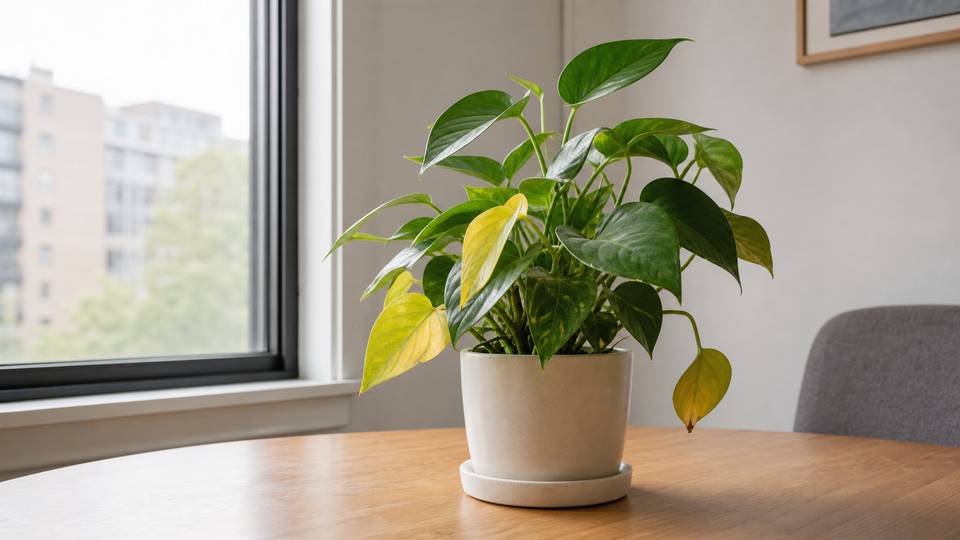
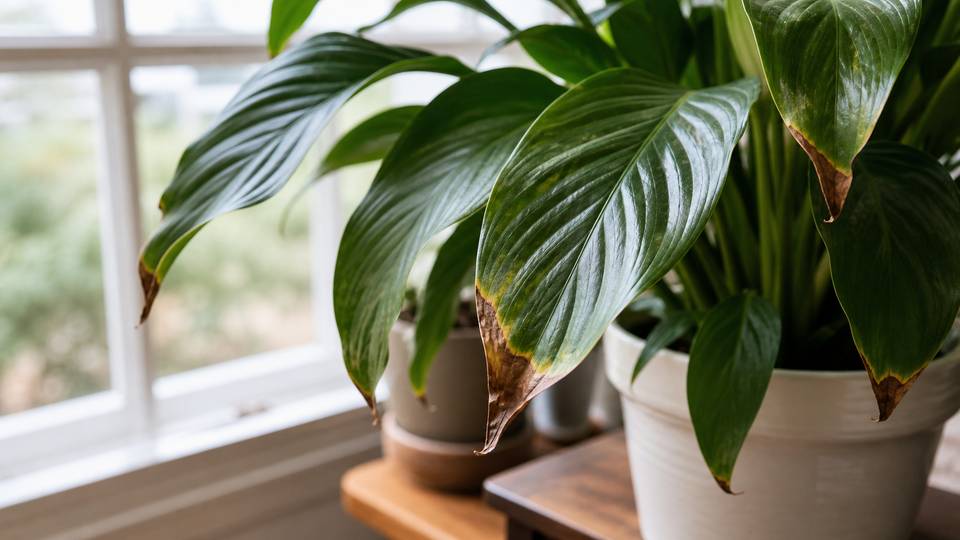
Yellow leaves, soft stems, an unusual decaying odor along with other warning signs, fungus gnats, and a pot that stays wet for many days can all point toward a moisture problem. They do not prove one cause by themselves, but they are signs to slow down.
Adjust With the Season
Many indoor plants use less water in cooler, darker months. That does not mean they need neglect; it means the potting mix may dry more slowly.
In winter or in low-light apartments, check before watering even if the plant was watered weekly in summer. In brighter months, near warm windows, or in dry rooms, check more often.
The habit stays the same: look first, water second.
Common Mistakes
The most common mistake is watering every plant the same way. A small herb pot, a large foliage plant, and a succulent do not have the same water needs.
Another mistake is leaving water in a saucer because the plant “might drink it later.” Some plants can take up some water from below, but a pot sitting in water for too long can keep the root area too wet.
A third mistake is trying to fix every yellow leaf with water. Yellow leaves can come from watering problems, light changes, age, pests, temperature stress, or several issues at once.
When to Pause and Recheck
Pause watering if the potting mix is still wet, the plant is dropping soft yellow leaves, there is an unusual decaying odor along with other warning signs, or water sits in the saucer long after watering. Check drainage, light, pot size, and whether the plant has been moved recently.
If roots are black, mushy, or badly damaged, the plant may need more than a watering adjustment. At that point, a local nursery, cooperative extension resource, or plant clinic may be more useful than another guess.
Sources and Further Help
For additional guidance on indoor plant watering and drainage, see:
- Clemson Extension: Indoor Plants - Watering
- Virginia Cooperative Extension: Properly Watering Container Houseplants
- UC Agriculture and Natural Resources: Watering Your Houseplants
Quick Questions
Should indoor plants be watered on a weekly schedule?
A weekly reminder can help you check plants, but it should not decide watering by itself. Check soil moisture and pot weight first.
What is the easiest way to avoid overwatering?
Use pots with drainage, check the soil before watering, empty saucers after drainage, and adjust for season, light, and pot size.
Can a plant look wilted when it has too much water?
Yes. Wilting can happen with dry soil or overly wet soil, so check the potting mix before adding more water.