Indoor Plant Care
How to Clean Dusty Houseplant Leaves
Clean dusty houseplant leaves safely with simple methods for smooth, large, delicate, and fuzzy leaves without using shine products.
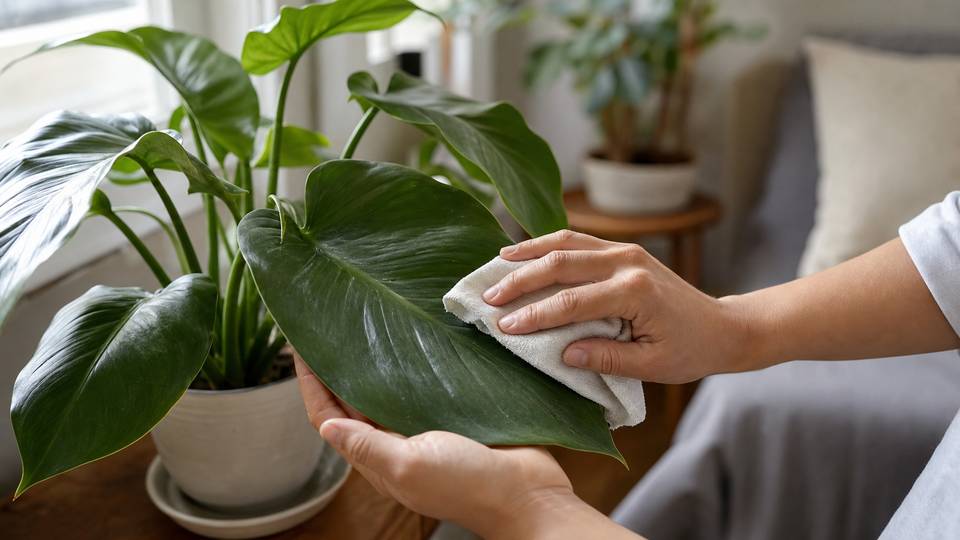
Dusty houseplant leaves are easy to ignore until the plant starts looking dull. Cleaning them is not about making every leaf glossy. It is basic care: remove dust gently, inspect the plant while your hands are already there, and avoid products that create a new problem.
Different leaves need different handling. A rubber plant leaf can tolerate a light wipe. A fuzzy African violet leaf should not be scrubbed like a countertop.
Quick Answer
Clean smooth houseplant leaves with a soft damp cloth, supporting each leaf with your other hand. Rinse sturdy plants in lukewarm water when practical, then let them drain well. Use a soft dry brush for fuzzy leaves. Avoid leaf shine products, oils, harsh soaps, and any spray that is not clearly appropriate for the plant.
Match the Method to the Leaf
Start by looking at the leaf surface. The safest method depends more on texture than on how dusty the plant looks.
| Leaf Type | Good Cleaning Method | Avoid |
|---|---|---|
| Large smooth leaves | Wipe with a damp microfiber cloth or soft cotton cloth | Heavy pressure, oily shine products |
| Many small smooth leaves | Gentle rinse in a sink or shower if the pot can drain | Cold water, leaving the pot waterlogged |
| Fuzzy leaves | Soft dry brush, gentle dusting | Wet wiping, rubbing, soaking |
| Thin or delicate leaves | Light rinse or careful dusting | Pulling, bending, repeated handling |
| Cactus or spiny plants | Soft brush or careful air movement | Bare hands near spines |
If you are unsure how a plant will react, clean one leaf gently and wait before doing the whole plant.
Use a Damp Cloth for Smooth Leaves
For broad, smooth leaves, a damp cloth is usually the easiest method.
Use room-temperature water. Wring the cloth so it is damp, not dripping. Hold the leaf from underneath with one hand and wipe from the base toward the tip with the other. Do not pull the leaf away from the stem.
Turn the cloth as it collects dust. If the plant is very dusty, rinse the cloth between leaves instead of moving grime around.
This is also a good time to inspect the plant. Check leaf undersides, stem joints, and new growth for sticky residue, small insects, webbing, or unusual spots. Cleaning and pest inspection fit naturally together.
Rinse Sturdy Plants When It Makes Sense
Some plants are easier to rinse than wipe, especially if they have many small leaves. A gentle shower or sink rinse can work if the pot has drainage and the plant is sturdy enough to move.
Use lukewarm water, not cold or hot water. Keep the stream gentle. Let the pot drain before returning it to a saucer or cachepot. If the potting mix is already wet, skip the rinse or protect the soil surface so you do not add more water than the plant needs.
Do not rinse plants that are already stressed, newly repotted, covered in fuzzy leaves, or too fragile to move safely.
Clean Fuzzy Leaves Dry
Fuzzy leaves hold water and can be damaged by rubbing. For plants with soft hairs on the leaves, use a small soft brush, clean paintbrush, or gentle makeup brush. Brush lightly in the direction the leaf naturally lies.
Do not try to polish fuzzy foliage. A little dust is better than bruised leaf tissue.
If the plant also has suspected pests, isolate it and use plant-specific pest guidance rather than scrubbing the leaves.
Skip Homemade Shine Mixes
It is tempting to use oil, milk, mayonnaise, or a leaf shine spray after cleaning. For beginner care, skip that step.
Shiny does not always mean healthy. Coating leaves can attract dust, block a natural-looking surface, or make it harder to notice early pest signs. Some products may be inappropriate for specific plants.
Plain water and a soft cloth solve most dust problems on smooth leaves. If a plant has a special cleaning recommendation from a reputable source, follow that instead of a social media shortcut.
UMN Extension’s indoor plant pest guidance gives a useful routine-care reminder: keep plants clean, wipe dusty leaves with a damp cloth, and avoid leaf shine products or milk. That keeps this task simple and away from fussy polishing recipes.
Keep Soil and Furniture in Mind
Leaf cleaning can turn into accidental overwatering. If you rinse a plant, count that moisture as part of the watering picture. Let the pot drain fully and empty the saucer.
If you clean plants on furniture, place a towel under the pot. Water can run along stems and drip after you think the job is finished.
For large plants that cannot move, clean in place with a damp cloth and a dry towel nearby.
Add Cleaning to a Simple Routine
Dust does not need a strict calendar. It needs a small recurring check.
During your regular plant routine, look for:
- A dull film on leaves
- Dust near vents, windows, or busy rooms
- Sticky residue
- Fine webbing
- Speckled or faded leaf patches
- Leaves bent under their own dust or grime
If the plant looks clean and healthy, leave it alone. Too much handling can be its own stress.
When to Do More Than Clean
Dust comes off with water or a brush. Sticky residue, webbing, moving insects, or spreading spots need closer attention. Do not treat those as a cleaning problem only.
Move the plant away from nearby plants if pests are possible. Take clear photos, identify the plant, and compare symptoms with extension or plant clinic guidance before using any treatment.
Sources and Further Help
For additional guidance on indoor plant care and pest checks during routine maintenance, see:
- Illinois Extension: Keep houseplants happy with simple solutions
- University of Minnesota Extension: Insects on indoor plants
Quick Questions
How often should I clean houseplant leaves?
Check leaves during a weekly or biweekly plant routine and clean when dust is visible, rather than following a strict schedule.
Can I use leaf shine on indoor plants?
Skip shine products unless the plant source specifically recommends them. A damp cloth or gentle rinse is usually enough for smooth leaves.
How do I clean fuzzy houseplant leaves?
Use a soft dry brush or gentle air movement instead of wiping hard or soaking the leaf surface.