Indoor Plant Care
Drainage Holes vs Cachepots for Houseplants
Learn how drainage holes and cachepots work for indoor plants, when decorative pots are risky, and how beginners can avoid trapped water.
Decorative pots are one of the easiest ways to make a houseplant look settled in a room. They are also one of the easiest places to hide a watering problem.
The issue is not decoration. The issue is whether extra water can leave the root area and whether you can see where that water goes.
Quick Answer
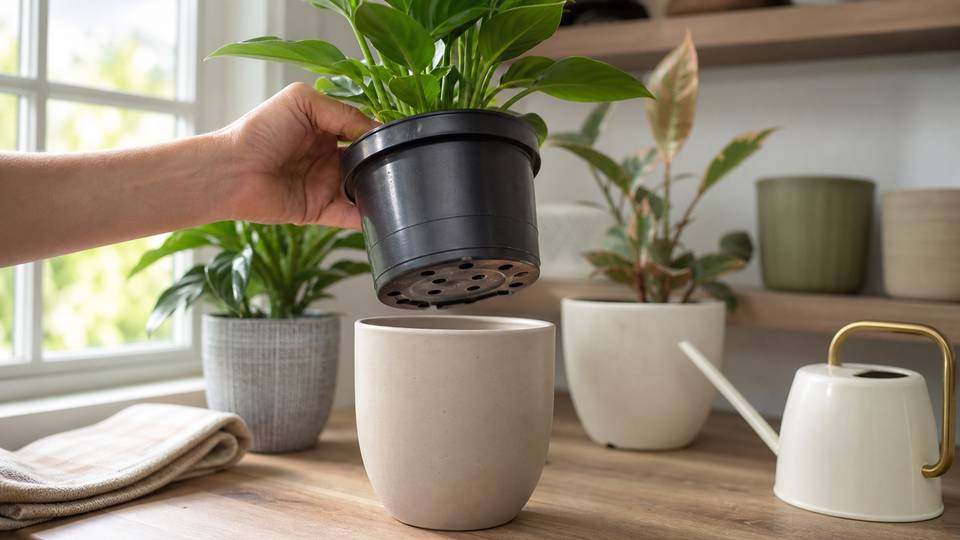
A drainage hole lets extra water leave the pot after watering. A cachepot is a decorative outer pot that usually holds a smaller nursery pot inside it. For most beginners, the simplest setup is a plant in a plastic nursery pot or other inner pot with drainage holes, placed inside a cachepot for looks. After watering, lift the inner pot or check the bottom of the cachepot so water is not trapped around the roots.
What a Drainage Hole Actually Does
A drainage hole gives water an exit. When you water a plant thoroughly, some water moves through the potting mix and leaves through the bottom. This helps prevent the root area from staying soaked after the plant has had enough moisture.
Drainage does not make a plant impossible to overwater. You can still water too often, use a potting mix that stays wet for too long, or leave the pot sitting in a full saucer. But drainage gives you more room for ordinary beginner mistakes.
Clemson Extension’s houseplant watering guidance notes that watering frequency changes with plant type, pot type, potting mix, location, and growth stage. Drainage is one part of that larger picture, not the whole answer.
What a Cachepot Does
A cachepot is an outer decorative container. It may be ceramic, metal, basket-style, plastic, or another material. Many cachepots do not have drainage holes because they are meant to protect furniture and hide the plain nursery pot.
That can work well if you treat the cachepot as a sleeve, not as the plant’s real growing container.
A good cachepot setup looks like this:
- The plant stays in an inner pot with drainage holes.
- The inner pot can be lifted out easily.
- Extra water is checked after watering.
- The plant is not left standing in water for long periods.
The trouble starts when the cachepot fills with water and nobody notices. The top of the soil may look normal while the bottom of the inner pot sits in a hidden puddle.
Compare the Setups
| Setup | Beginner Benefit | Main Risk | Better Habit |
|---|---|---|---|
| Pot with drainage hole and saucer | Easy to water thoroughly and see runoff | Saucer can stay full | Empty the saucer after drainage slows |
| Nursery pot inside cachepot | Decorative but still drainable | Water hides in the outer pot | Lift the inner pot and check after watering |
| Decorative pot with no hole | Protects furniture and looks finished | Water has nowhere easy to go | Use a liner pot or water very cautiously |
| Self-contained planter | Can look tidy indoors | Hard to judge moisture if unfamiliar | Learn the reservoir or insert system before adding sensitive plants |
If you are new to houseplants, choose the setup that lets you inspect water, not the one that hides it best.
How to Water With a Cachepot
The safest beginner method is simple:
- Lift the inner pot out of the cachepot.
- Water the potting mix slowly until water drains from the bottom.
- Let the pot drain in a sink, tub, tray, or saucer.
- Return it to the cachepot after dripping slows.
- Check the cachepot later if the plant was returned quickly.
If the plant is too heavy to move, water slowly and use less at one time. After a short wait, tilt or lift the inner pot slightly to see whether water has collected below. Use a towel or small cup to remove standing water if needed.
This is less convenient than watering and walking away, but it prevents the most common cachepot problem: roots sitting in water you cannot see.
When a No-Hole Pot Is Especially Risky
Planting directly into a no-hole pot is possible, but it asks for careful judgment. Beginners often cannot see how wet the lower potting mix is, so they water again when only the top has dried.
Be extra cautious with:
- Large decorative pots that dry slowly
- Dense potting mixes
- Low-light rooms
- Cool rooms in winter
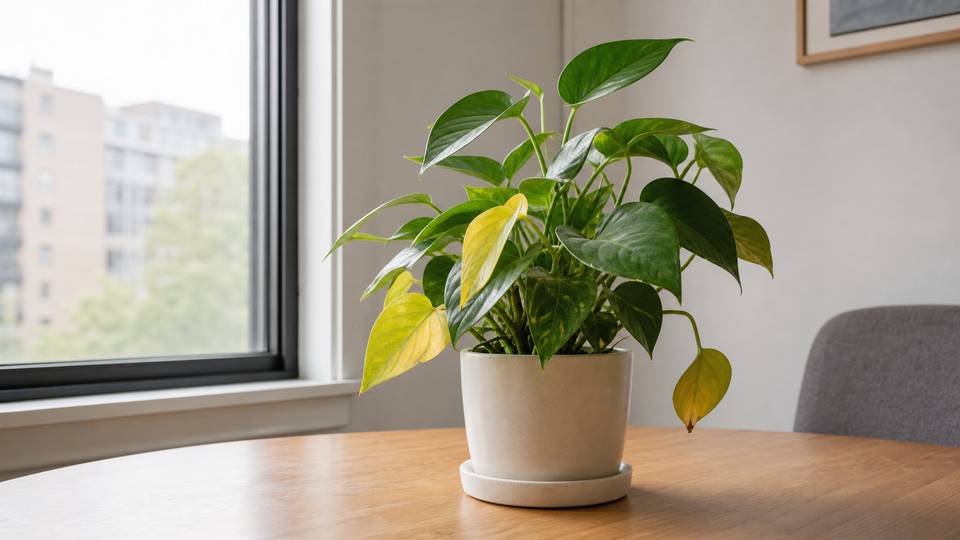
- Plants already showing yellow leaves or soft stems
- Pots with pebbles at the bottom instead of a real drainage exit
A layer of pebbles does not turn a closed pot into a draining pot. Water still stays inside the container. The root area may sit above or in that wet zone depending on pot depth, soil volume, and how much water is added.
Furniture Protection Without Trapping Water
Indoor plant care has to work for the room, too. Water rings, stains, and leaks are real problems, especially on wood furniture or rental floors.
Use practical protection:
- A saucer under a draining pot
- A waterproof tray
- Felt or cork pads under the outer pot
- A cachepot that is easy to inspect
- Watering in the sink for small plants
Do not rely on a pretty basket alone. Baskets can hide plastic liners, leaks, or damp spots. If a basket holds a plant, use a waterproof liner or inner pot and check underneath regularly.
Signs Your Pot Setup Is Holding Too Much Water
The container may be part of the problem if:
- The potting mix stays wet for many days.
- Yellow leaves appear with soft stems or drooping.
- Fungus gnats are showing up around damp soil.
- The cachepot has water in the bottom after watering.
- The plant improves when you let the mix dry more between waterings.
These signs do not prove one diagnosis, but they are enough reason to check the container before adding fertilizer or moving the plant.
A Simple Beginner Rule
Use drainage for the growing pot. Use the cachepot for appearance. Keep those jobs separate.
That one habit makes watering easier to understand. You can still enjoy a decorative pot, protect furniture, and give the plant a better chance of drying at a reasonable pace.
Sources and Further Help
For additional guidance on houseplant watering and container drainage, see:
- Clemson Extension: Indoor Plants - Watering
- Virginia Cooperative Extension: Properly Watering Container Houseplants
Quick Questions
Do all houseplants need pots with drainage holes?
Most beginner houseplants are easier to care for in pots with drainage holes because extra water can leave the root area.
Is a cachepot bad for indoor plants?
A cachepot can work if the plant stays in a draining inner pot and you check for trapped water after watering.
Can I plant directly into a decorative pot with no hole?
It is riskier for beginners because water has nowhere easy to go. Use a draining liner pot when possible.