Indoor Plant Care
How to Move Indoor Plants to a Brighter Spot
Move indoor plants toward better light without sudden sun stress by checking window direction, heat, plant type, and gradual changes.
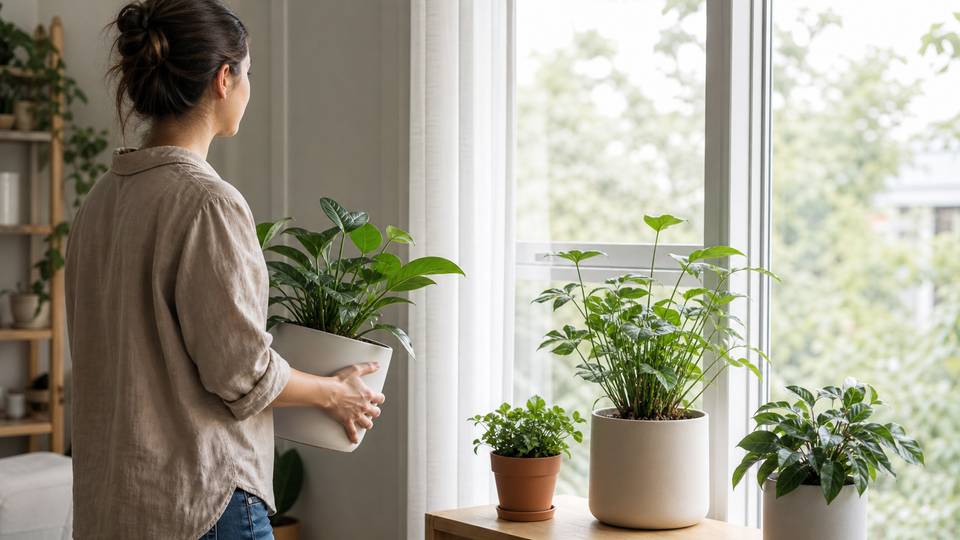
Moving a plant closer to a window can help, but brighter is not automatically better. Indoor plants that have been living in a dim corner may react badly if they are placed suddenly against hot glass or in strong afternoon sun.
The goal is a controlled move: more usable light, less shock, and enough time to see how the plant responds.
Quick Answer
Move an indoor plant to a brighter spot gradually. Identify the plant first, compare the current and new light, avoid hot direct sun unless the plant is suited to it, and watch soil moisture after the move. Increase light in stages over several days or weeks when the change is large.
Start With the Plant You Have
Before moving the pot, identify the plant as closely as you can. A snake plant, fern, succulent, pothos, and calathea do not want the same light.
Plant tags and care guides often use words like bright indirect light, medium light, or direct sun. Those phrases are imperfect, but they are still useful. They remind you that a plant can need more light without needing harsh sun on its leaves all afternoon.
If you do not know the plant, make a modest move first. A few feet closer to a bright window is usually easier to judge than a sudden change from a shelf to the windowsill.
Read the Room Before Moving
Watch the new spot for a day if you can. Indoor light changes by hour, season, window direction, nearby buildings, curtains, and trees outside.
Use this quick room check:
| New Spot | What to Notice |
|---|---|
| North-facing window | Often bright but less direct in many homes |
| East-facing window | Morning sun can be gentler |
| South or west window | Often brighter and hotter, especially in warm seasons |
| Behind a sheer curtain | More filtered and forgiving for many foliage plants |
| Against the glass | Can mean heat, cold, or direct sun stress |
Illinois Extension notes that houseplants may react when their location changes. That does not mean moving is wrong; it means the first weeks after a move are observation time.
Move in Stages
If the plant is going from dim to much brighter light, use stages.
A simple transition:
- Move the plant closer to the window but out of direct sun.
- Leave it there for several days.
- Watch leaf color, firmness, and soil drying speed.
- Move it slightly closer if it looks steady.
- Use a sheer curtain or pullback from the glass if sun feels hot on your hand.
For plants that need high light, the final spot may be close to a sunny window. For many foliage plants, the better answer is bright filtered light rather than direct afternoon sun.
Watch the Sun-Facing Side
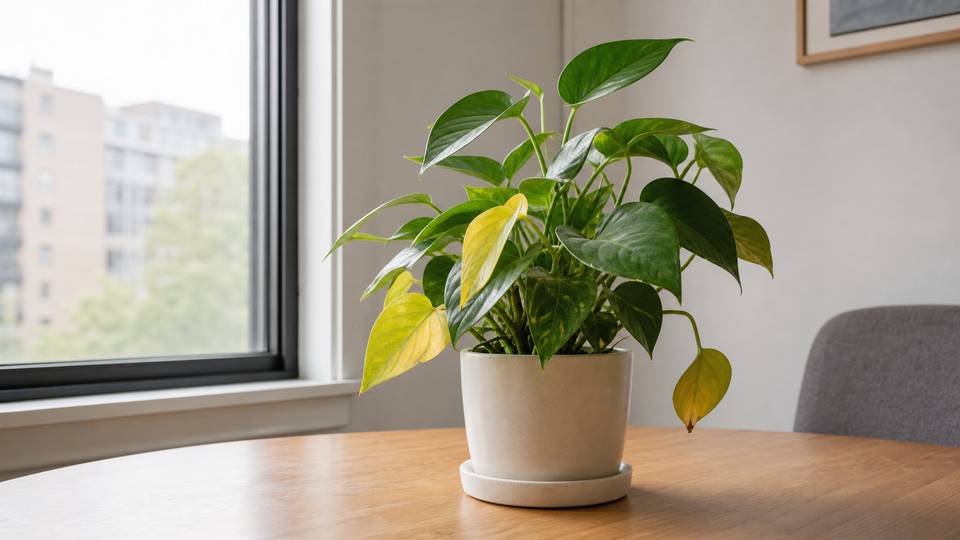
After a move, inspect the side facing the window. Early stress often shows there first.
Look for:
- Pale or bleached patches
- Crispy areas on the side facing the sun
- Leaves curling away from the window
- Sudden limpness during the hottest part of the day
- Soil drying much faster than before
These signs do not always mean the plant must return to its old spot. Sometimes it only needs to move back a foot, receive filtered light, or be rotated gently.
Do Not Change Everything at Once
When a plant looks weak, it is tempting to move it, water it, fertilize it, prune it, and repot it in the same weekend. That makes the result hard to understand.
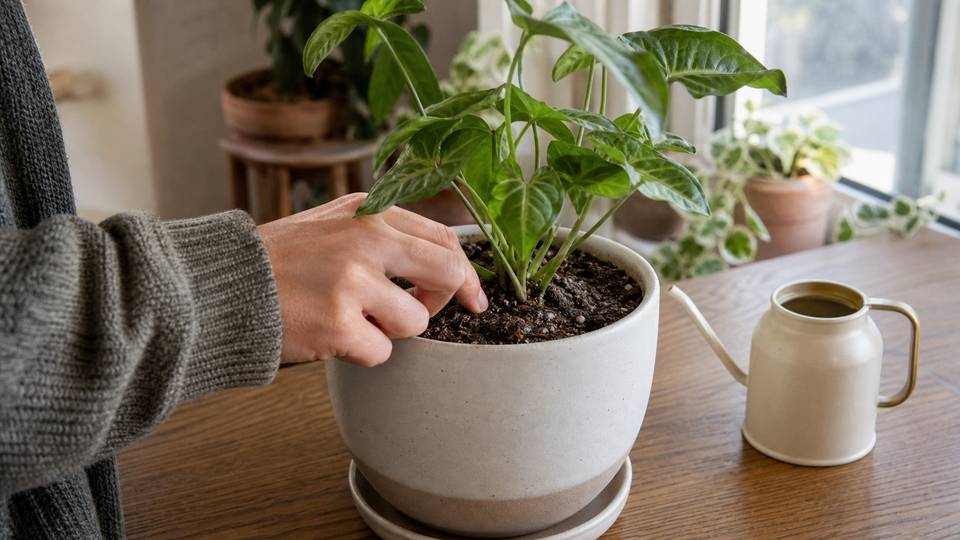
If the plant is stable enough, change the light first and keep the rest of care steady. Check moisture before watering. Avoid fertilizing immediately unless the plant’s care situation clearly calls for it.
A brighter spot can dry the pot faster, but that does not mean watering should become automatic. Let the potting mix and plant type guide the next watering.
Consider Heat and Drafts
Windows are not only light sources. They can be heat sources, cold spots, and draft zones.
A plant pressed against glass may be colder at night in winter or hotter in afternoon sun. A nearby vent can dry leaves and potting mix. A window opened for fresh air can expose tropical plants to sudden cold.
If a plant improves in brighter light but gets crispy tips or wilted afternoons, the issue may be heat or dry air rather than light alone.
When Not to Move Yet
Wait before making a major light change if the plant was just repotted, recently shipped, badly overwatered, or already losing many leaves. A small placement adjustment may still help, but a dramatic move can add stress before you understand the first problem.
Also pause if you suspect pests. Isolate and inspect the plant first so you do not move pest pressure closer to other plants.
A Practical Two-Week Check
After two weeks in the brighter area, ask:
- Is new growth leaning less?
- Are leaves firmer or better colored?
- Is the pot drying at a manageable pace?
- Are any leaves scorched, bleached, or crisping?
- Does the plant need a slight rotation?
Do not judge the move by one older leaf dropping. Judge it by the whole plant, new growth, and whether the care routine is becoming easier.
Sources and Further Help
For additional guidance on houseplant light stress and location changes, see:
- Illinois Extension: Keep houseplants happy with simple solutions
- Clemson Extension: Indoor Plants - Watering
Quick Questions
Can I move a houseplant straight into a sunny window?
Move gradually unless the plant already tolerates that light. A sudden jump into direct sun can scorch some indoor plants.
How do I know if a brighter spot is too bright?
Watch for bleached patches, crispy sun-facing areas, curling, or stress that appears after the move, especially near hot glass.
Should I water more after moving a plant to brighter light?
Check more often, but do not water automatically. Brighter, warmer spots can dry pots faster, while plant type and pot size still matter.