Container Gardening
Potting Mix vs Garden Soil for Containers
Understand why potting mix usually works better than garden soil in containers, especially for herbs, vegetables, balconies, and small spaces.
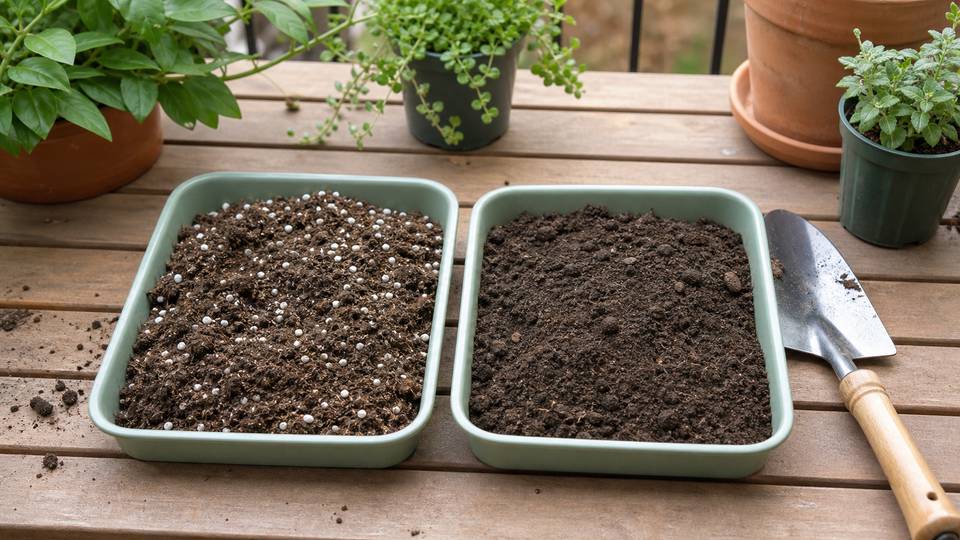
Garden soil looks useful because it is already there. If you have a yard, a raised bed, or a friend offering extra soil, it can feel wasteful to buy a bag labeled for containers.
But a pot is not the ground. In a container, roots have a limited volume of material, water exits only through drainage holes, and heavy soil can stay dense after repeated watering. That is why container advice often starts with the growing medium before it talks about the plant.
The Short Version
Use a container potting mix for most herbs, vegetables, and balcony planters. Garden soil can be too heavy in pots, may compact, may drain poorly, and may bring weeds or soil-borne problems. A good potting mix should hold some moisture while still letting air and extra water move through the root area.
Why Pots Change the Rules
In the ground, soil connects to a larger system. Water can move down and sideways. Roots can explore. Soil life, texture, and drainage vary from place to place.
A container is closed off by walls. Even with drainage holes, the plant only has the mix inside that pot. If the material becomes compacted, soggy, or crusted, the whole root area feels it.
UNH Extension’s container vegetable guidance says garden soil is too heavy for containers and points growers toward lightweight media that hold nutrients and moisture while draining well. That is the core difference: container media has to do several jobs in a small space.
Compare the Choices
| Growing Medium | Usually Better For | Main Container Problem |
|---|---|---|
| Garden soil | In-ground beds, amended garden areas | Can become dense, heavy, and slow-draining in pots |
| Bagged potting mix | Most indoor and outdoor containers | Quality varies; may dry out if allowed to become very dry |
| Seed-starting mix | Starting seeds in small cells | Often too fine or low-nutrient for long-term containers |
| Raised bed mix | Raised beds or large contained beds | May still be too heavy for smaller pots |
| Homemade blend | Experienced growers with a tested recipe | Easy to make too dense or too light without guidance |
The label matters. “Garden soil,” “topsoil,” “raised bed mix,” “potting soil,” and “potting mix” are not interchangeable.
What Potting Mix Is Trying to Do
A useful container mix balances four needs:
- Holds enough moisture that the pot does not dry immediately
- Drains well enough that roots are not sitting in stale water
- Holds air space after watering
- Gives roots a loose structure to grow through
Common ingredients may include peat moss, coconut coir, composted bark, compost, perlite, vermiculite, or sand. The exact recipe varies. Some mixes include fertilizer; some do not. Some are designed for seed starting, some for houseplants, and some for edible containers.
Read the bag. For edible herbs and vegetables, choose a product intended for container growing and appropriate for edible plants.
Why Garden Soil Causes Trouble in Pots
Garden soil may be excellent in the garden and still awkward in a container. In pots, it can:
- Compact after watering
- Drain slowly
- Pull away from pot edges when dry
- Add unnecessary weight to balconies or shelves
- Bring weed seeds
- Carry soil-borne pests or disease issues
Those are not moral failures of garden soil. They are fit problems. A container asks for a medium that stays open and workable in a limited space.
Edible Containers Need Extra Caution
For herbs and vegetables, avoid scooping unknown soil into pots. You do not know whether it contains weed pressure, pesticide residue, animal waste, or other contaminants. This article is not a food-safety inspection, so keep the advice simple: use clean containers and a container mix suited to edible plants.
If you are reusing pots, wash them first. Do not use containers that previously held chemicals, solvents, automotive products, paint, or unknown materials for edible crops.
If you add fertilizer, follow the product label. Do not add extra because the plant looks slow; slow growth may be light, season, temperature, pot size, or watering.
When Garden Soil Might Belong Nearby
Garden soil can still belong in garden beds, in-ground planting areas, or some large raised-bed setups when it is amended and managed appropriately. That is a different situation from a small balcony pot or windowsill herb container.
If you are filling a large raised bed, local extension guidance and a soil test may be more useful than container advice. If you are filling a 10-inch herb pot, choose potting mix.
A Beginner Buying Rule
For small-space containers, look for:
- “Potting mix” or container use on the label
- Good drainage language
- No strong brand promise needed
- Suitability for vegetables or herbs if growing edible plants
- A bag size you can store and handle
Avoid buying by price alone. The cheapest heavy material can make watering harder, and the most expensive specialty mix may be unnecessary for a beginner herb pot.
Sources and Further Help
For additional guidance on container growing media, see:
- UNH Extension: Growing Vegetables in Containers
- Oregon State Extension: No yard? Grow vegetables in containers
- University of Florida IFAS Gardening Solutions: Container Media
Quick Questions
Can I use garden soil in containers?
It is usually not the best choice. Garden soil can become heavy and compacted in pots, which may cause drainage and root problems.
Is potting mix the same as soil?
Not always. Many potting mixes are lightweight blends designed for containers and may contain peat, coir, bark, compost, perlite, or similar ingredients.
Can I mix garden soil with potting mix?
For beginners, a container potting mix is usually simpler. If you blend materials, use extension guidance and avoid dense, poorly draining mixes.