Container Gardening
How to Water Balcony Planters in Hot Weather
Water balcony planters in hot weather with a practical routine that accounts for sun, wind, pot size, drainage, and renter limits.
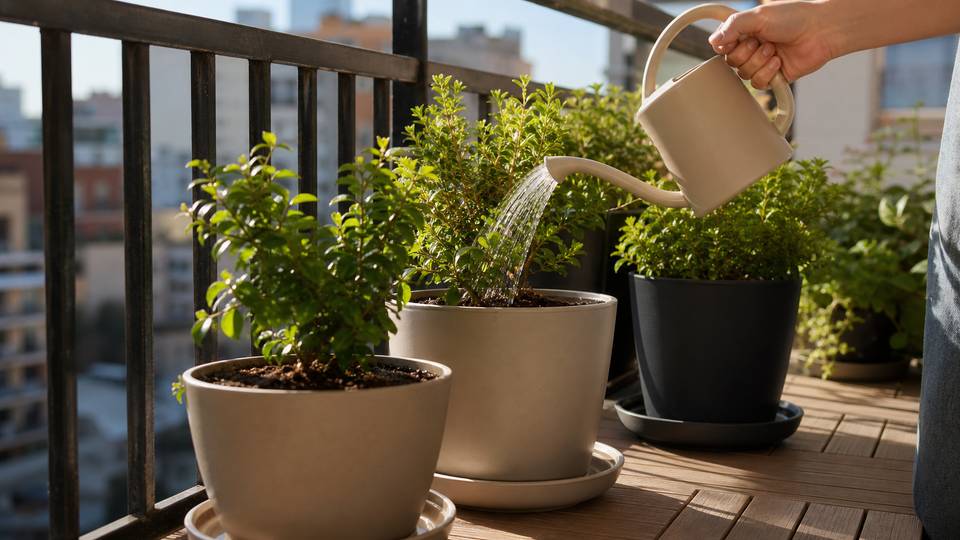
Balcony planters can go from fine to wilted quickly in hot weather. The pots are small, the wind is stronger than it feels indoors, and sun can heat railings, walls, and container sides.
The answer is not always “water more.” It is to check more often, water more carefully, and adjust the setup so the pot can hold useful moisture without staying swampy.
Start With a Heat Check
During a hot spell, look at each planter once in the morning if you can. Do not wait until leaves are limp in the strongest afternoon sun.
Check:
- Is the top inch of mix dry, damp, or crusted?
- Is the pot light when lifted?
- Are leaves wilted in morning or only in afternoon heat?
- Is wind hitting the planter directly?
- Is water running out before the mix absorbs it?
- Is runoff controlled so it does not drip below?
Penn State Extension’s container vegetable guidance emphasizes drainage, growing medium, sunlight, and ongoing care as core container factors. In heat, all of those show up at once.
Water Slowly Enough to Soak the Mix
Hot, dry potting mix can shed water. If you pour quickly, water may run down the sides and out the bottom while the root ball remains partly dry.
Water in passes:
- Add a small amount of water.
- Wait a minute.
- Add more until the mix is evenly moist.
- Stop when water drains from the bottom.
- Empty saucers before they overflow or keep roots standing in water.
If the pot has pulled away from the sides, water especially slowly. A watering can with a gentle spout helps more than a hard blast.
Watch Morning Wilt vs Afternoon Wilt
Afternoon wilt during extreme heat does not always mean the pot is dry. Some plants droop temporarily because heat and sun are intense. If the plant perks up in the evening and the soil is still moist, adding more water may not help.
Morning wilt is more concerning. If the plant is wilted early and the mix is dry, water promptly. If it is wilted early and the mix is wet, check drainage, root health, and whether the plant is in a container that stays too hot or too soggy.
Adjust for Pot Size and Material
Small pots dry faster. Terracotta and fabric containers can dry faster than plastic or glazed containers. Dark pots can heat up in strong sun. Hanging baskets may dry very quickly because air moves around the whole container.
Use this as a practical guide:
| Planter Situation | Heat-Weather Habit |
|---|---|
| Small herb pot | Check daily; water before severe wilt |
| Large vegetable container | Check soil below the surface, not just the top |
| Hanging basket | Expect faster drying and wind exposure |
| Dark pot in afternoon sun | Consider moving or shading the pot side |
| Tray or saucer under pot | Use for runoff control, but do not leave roots in water |
Do not add water just because a pot looks dry on top. Check a little deeper when practical.
Give the Pot Some Help
If watering feels impossible, change the conditions around the planter.
Helpful options:
- Move pots out of the harshest afternoon sun if the plant tolerates it.
- Group containers so wind does not hit every side.
- Use a larger container for thirsty plants.
- Add a light mulch layer if appropriate for the crop and container.
- Keep plants out of direct heat from metal railings or reflective walls.
- Choose plants suited to your balcony exposure next time.
Mulch should not touch tender stems or make the surface stay slimy. Use it as a moisture buffer, not a cure-all.
Keep Renter and Neighbor Limits in View
Hot-weather watering can create runoff. On a balcony, runoff is not just a plant issue. It can stain surfaces, drip below, or conflict with building rules.
Water slowly, use saucers or trays where appropriate, and stop before water crosses into shared areas. If your lease, HOA, or building rule says something specific about balcony watering, follow that rule. If water restrictions apply in your area, follow local guidance.
This article cannot tell you what your balcony is allowed to handle. When rules are unclear, choose fewer, smaller, movable planters and ask the property manager.
Edible Plants Need Clean Handling
For herbs and vegetables, use clean water, clean containers, and potting mix suited to edible container growing. Wash harvested produce. If fertilizer is used, follow the label for edible crops.
Heat can stress edible plants, but extra water will not solve every heat problem. Some cool-season crops may slow down or decline in hot weather even with careful watering.
Sources and Further Help
For additional guidance on hot-weather container care, see:
- Penn State Extension: Container Vegetable Gardening - Four Keys to Success
- UNH Extension: Growing Vegetables in Containers
- Virginia Cooperative Extension: Vegetable Gardening in Containers
Quick Questions
Should I water balcony planters every day in hot weather?
Check them daily during heat, but water based on soil moisture, plant type, pot size, and exposure rather than a fixed daily rule.
Is morning or evening better for watering balcony plants?
Morning is often practical because plants start the hot part of the day hydrated. Evening can work if leaves and surfaces do not stay wet in a problem way.
Why do my balcony pots dry faster than indoor plants?
Balcony pots are exposed to sun, wind, heat, and limited soil volume, so they can lose moisture much faster than indoor containers.